
Craig Schroeder puts the heart into volunteer support
 March 2023
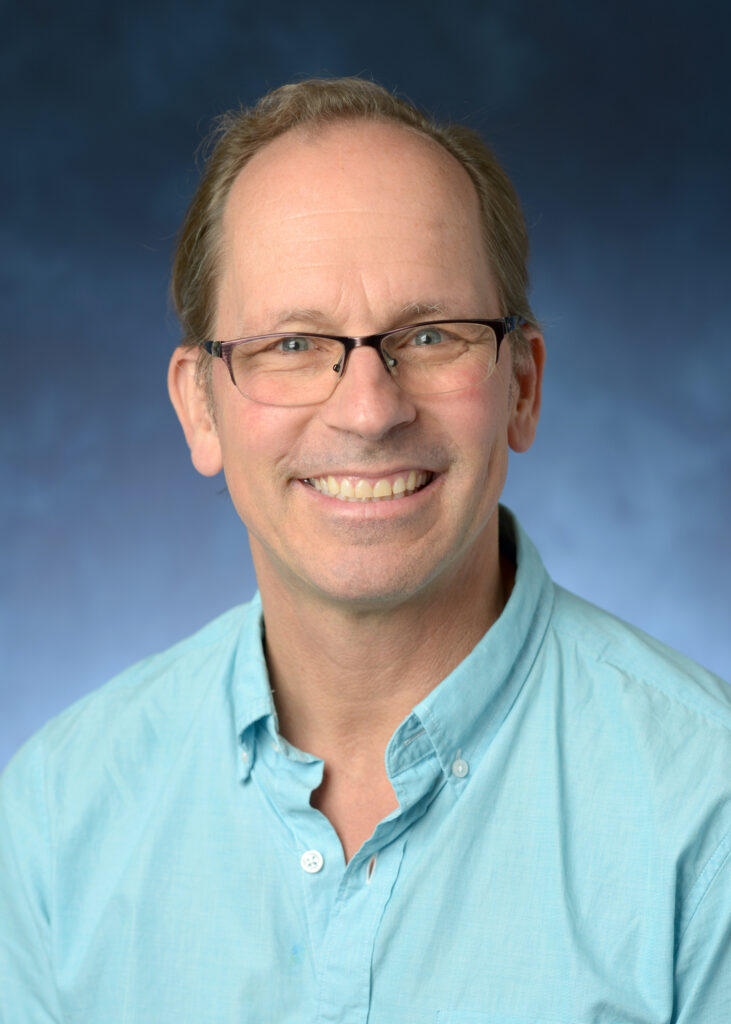
Over a decade ago, Craig Schroeder was ready for a career change and had applied to nursing school to become a trauma nurse. His friend Dr. Gary Pasternak, who had been working with Mission Hospice for several years, suggested that Craig would get valuable experience by volunteering. Craig completed his volunteer training in 2012 and dove right in, telling Volunteer Director Hank Nourse that he wanted three patients at a time.
He remembers fondly one particularly special patient he visited for nearly a year: Helen Lagen, who co-founded Mission Hospice in 1979. The pair became close friends.
Helen, who was bedridden, loved being outside in her garden. Each time he visited, Craig moved her to a gurney and took her outside where they sat together and talked. “It was an honor and a privilege to visit Helen. It was like taking care of my grandmother again. I learned so much about Mission Hospice.”
The experience of volunteering changed the trajectory of Craig’s life. Instead of heading to nursing school, in 2015 he joined the Mission Hospice staff as a Volunteer Coordinator – and when Hank retired three years later, Craig became our Volunteer Services Director.
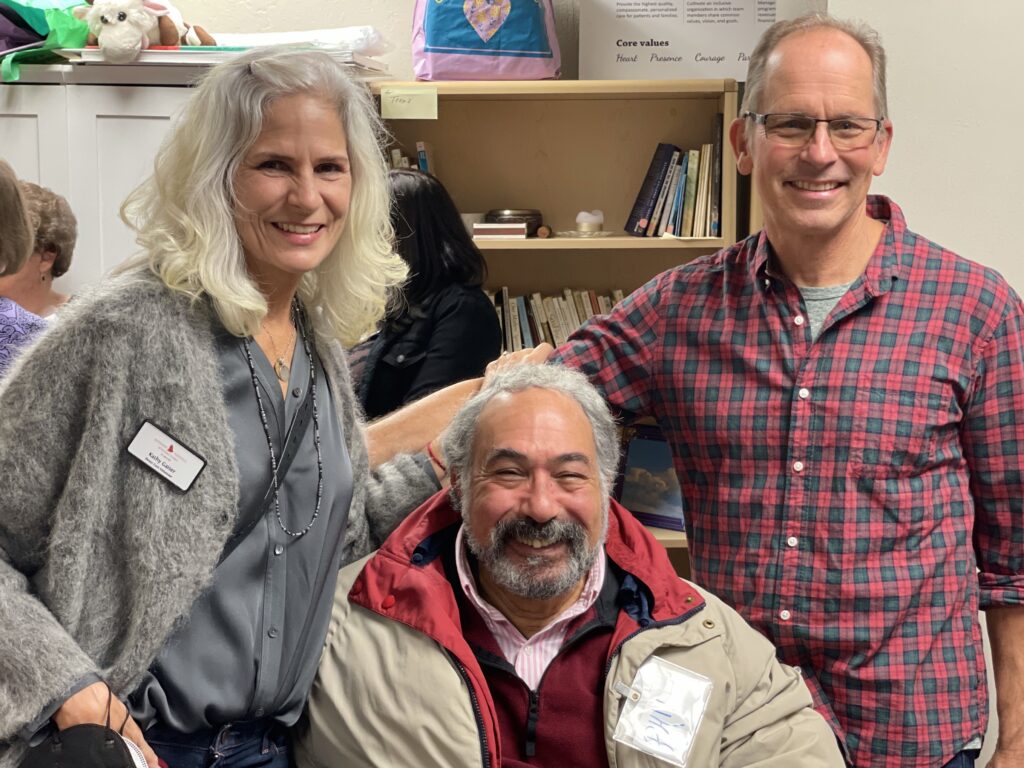
Together with Volunteer Coordinators Jennifer Guevarra and Constance Sweeney, Craig now supports around 130 volunteers who work throughout the Peninsula and South Bay. He leads an intensive 26-hour volunteer training twice a year, holds monthly volunteer support meetings, and offers volunteers continuing education and special training.
Craig explains that the Mission Hospice training is unique: while most hospice agencies rely on computer-based virtual training and testing, Mission Hospice volunteers are taught by our own experts, based on our philosophy of care.
“The throughline is heart-centered communication, listening, and compassion at the bedside.”
Craig certainly brings his heart to the program. A trained chef, he prepares and serves lunch to the volunteers at each of the Saturday training sessions. “No one goes hungry around me,” he says proudly.
Craig sees this kind of above-and-beyond support for volunteers as a part of our personalized approach. “Our volunteers support patients and families at the most transitional, intimate, and difficult time of life,” says Craig. “They need good training and good support to do their job. Our volunteers really make our organization stand out – they are the heart of Mission Hospice.”
Long-time volunteer Paul Smith says the feeling is reciprocal. “Craig makes each volunteer feel that they matter, and he gives you his complete attention and focus. He leads by example, and is sincere, insightful, supportive, and a total believer in the work we are all doing.”
Volunteers come to Mission Hospice from all over and for all kinds of reasons, and Craig has expanded the program to include high school and college students. All volunteers are trained to leave whatever’s going on in their life – good or bad – at the door. “The patient and family get to set the agenda,” he says. “The volunteers bring the magic.”
To make this magic happen, Craig and his team put a lot of thought into the match between a volunteer and a potential patient – each one unique. “We think about the patient and their needs, as well as the volunteer’s skills and experience,” he says. “A patient and family have only one chance at dying, and the match has to work for everyone.”
Craig says he is proud to be able to support our volunteers and – through them – our patients. His leadership is personal and heart-centered. “Everyone has a story,” he says. “Everyone has triumphs and losses in life. And everyone deserves respect, kindness, and compassion.”
Listening is the greatest gift we can give
Patricia Matthews, longtime Direct Care Volunteer and recipient of the 2020 Special Recognition award, explains: “All persons need to feel that their lives had purpose, and that their time here has mattered. It is an honor to bear witness, to be a keeper of memories, and to be entrusted with patients’ stories.” In her nearly 20 years of service, Patricia has heard many.
 Even though memory loss is a challenge for some patients, hope can come in unexpected places, as it did for Patricia’s patient Francis. He could never remember Patricia’s name, but he knew that she visited regularly, and called her “my faithful Friday visitor.”
Having lost some 50 years of memories – including those of his marriage and children – he still enjoyed sharing stories of his life growing up in Holland and his journey to the U.S. Patricia took Francis on a virtual walking tour of his hometown in Holland, and he was able to find his home, his father’s bakery, and his school. “He was so delighted,” says Patricia. “He thought it was magic!”
Patricia is fluent in French and Italian, and she loves it when she can share her Italian heritage with her patients. “Sometimes we travel to their countries via books, scrapbooks, family albums, or the iPad. Sometimes I bring a particular food, or we listen together to opera. Both food and music can be evocative and can bring back meaningful memories.”
One of Patricia’s patients, a lovely Italian woman in her 90s, asked Patricia where her family was from. “I told her she would never have heard of it, although it was close to Lucca. I said the name of the village. She put her hands to her cheeks, and tears came to her eyes. It was the village where her father had come from – my grandparents must have known him!”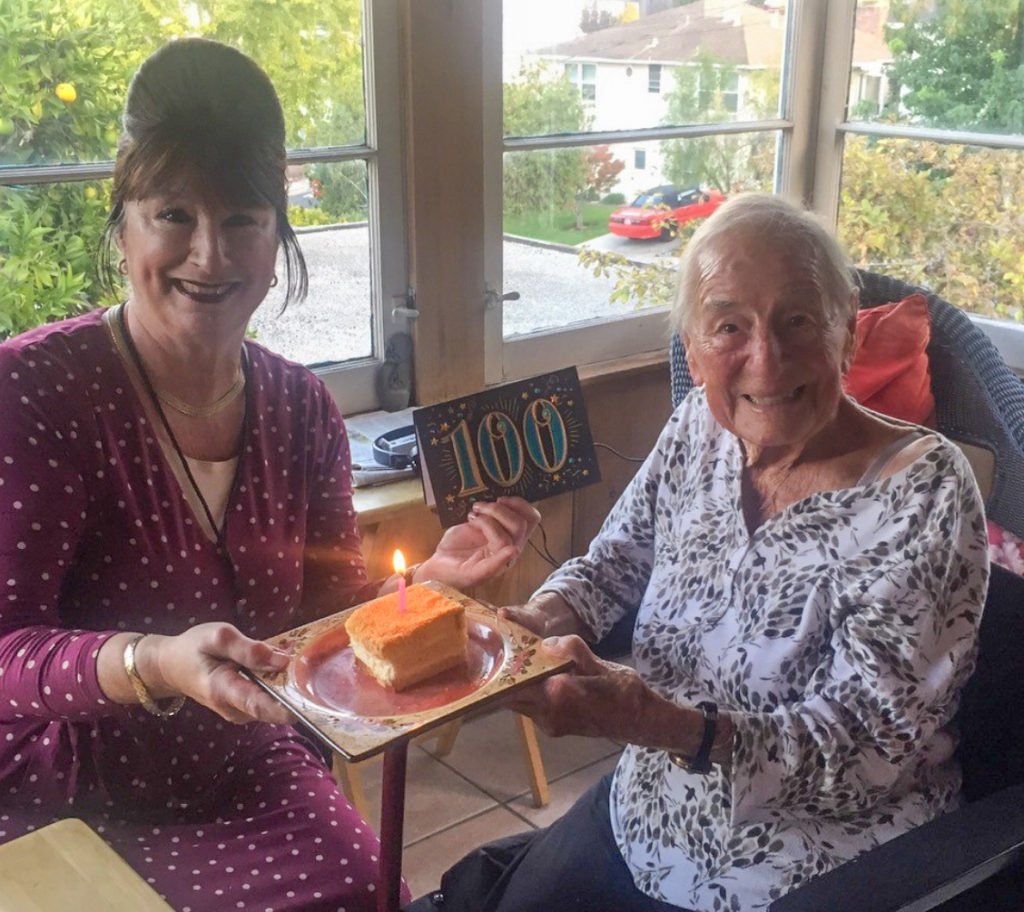
Another Italian patient, Clara, lived to celebrate her 100th birthday. Patricia says Clara “was an inspiration because she chose joy each day. She embraced life, and did not look at what she had lost, but at what she still had.”
One day, Patricia mentioned to Clara that she and her husband were planning a trip to Italy. “When Clara casually mentioned how wonderful it might be if I went to visit her family, I had to do it.”
Without knowing just which bakery was owned by Clara’s family, Patricia and her husband somehow found it – and were immediately embraced and kissed, as Clara was the beloved matriarch of the family. “They gave us pastries and we shared an aperitivo. It was such a special opportunity for all of us.”
“Being a hospice volunteer has given me some of the richest moments of shared humanity in the most intimate of deep physical and spiritual moments one could ever imagine,” says Patricia. “It is an honor and a privilege to accompany a patient on the last part of their journey in this life.”
To learn more about volunteering with Mission Hospice, join us for an online info meeting on March 23, 2021.
A day with a social worker: compassion and support for families
Listeners, problem-solvers, advocates, and much more, social workers wear many hats. Mission Hospice social worker Elizabeth (Tess) Rogers says that her job is “pairing what resources and support are available with what families are ready for.”
Tess aims to see each of her patients every two weeks, or more often as needed – patients’ needs may change over time. Some days Tess visits three or four patients; other days she spends more time making calls, faxing paperwork, or following up on MediCal or VA benefits.
“While nurses and physicians help with physical pain, we can help with emotional pain, resources, and counseling – for patients and families,” Tess explains. “Our job is to hold space for everyone to express their feelings, their fears, and their wishes, and to be the mediator as needed.”
On a recent day, Tess started with a phone call from a nurse who needed some advice about how to assist a struggling family. “It’s part of our job to support our fellow team members,” Tess explains. “We have such a supportive, compassionate team – we all have each others’ backs.”
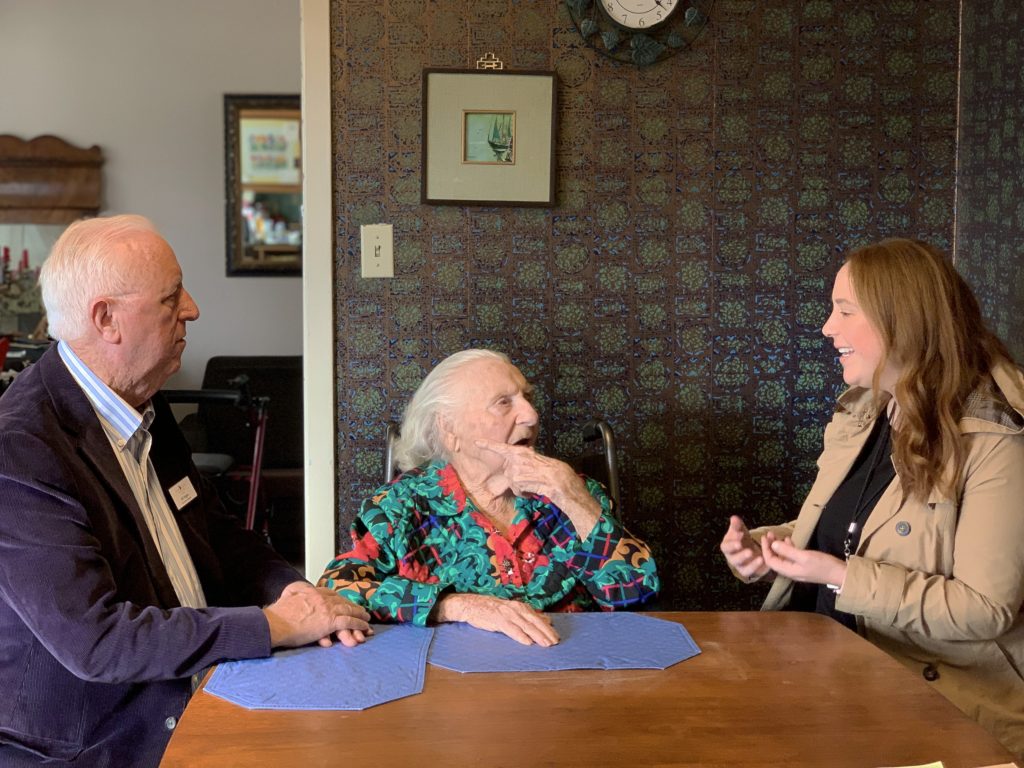 By the time this conversation has finished, Tess has arrived at the Millbrae home of her first patient.
Opal, a retired professor with Alzheimer’s disease, recently turned 102, and Tess brings with her a small box of doughnuts to celebrate. She’s welcomed like family by both Opal and her caregiver.
With her wheelchair scooted up to the dining room table, Opal eats breakfast while Tess visits. Warm and gentle, Tess asks Opal about her childhood on a Mississippi farm, skillfully working in questions about her pain level and mood.
“Is there anything on your heart that you want to talk about?” Tess asks. Opal says she wouldn’t change a thing about her life, something Tess says is a good reminder of staying in the present and expressing gratitude.
Tess also reassures the caregiver that she’s doing a good job. “Part of my role is to encourage the patient and family, to let them know that they can do this,” she says.
While stopping for a second cup of coffee, Tess makes some notes about the visit for other members of the care team. And later, she will – as usual – call Opal’s daughter Pam with an update. She explains: “Sometimes I work more with the family than with the patient. A lot of our work is helping families accept what is happening, while acknowledging their pain, grief, and sadness.”
Tess’ next stop is at the Redwood City home of John and Michelle. When John, who has prostate cancer, started hospice care, his wife was reluctant to accept social work support. After Tess offered to stay with him so Michelle could attend her church meetings, that built trust that allowed Tess to provide even more meaningful support to the family.
Tess explains that much of her work with this family has been counseling. “Both of them were angry about John’s disease. I was able to help them talk through it so that they could project their anger onto the disease, and not each other.” Tess also facilitated family meetings with their two adult daughters, who wanted to be more involved in care and decisionmaking.
Today, Tess talks to John about his veterans’ benefits, which she facilitated so that he could get the VA caregiver he had earned. Helping people navigate benefits and find resources is an important part of the social work role.
Only partly joking, Tess says that social workers are “the forms people.” In addition to helping people navigate insurance benefits, MediCal and Medicare, and paid family leave, they help people complete Advance Health Care Directives and review their POLST forms.
Social workers also help navigate care at a very practical level. “We can start the conversation about where the best place is for care. We help determine whether the patient is safe in the home, or needs care beyond what family members can provide.”
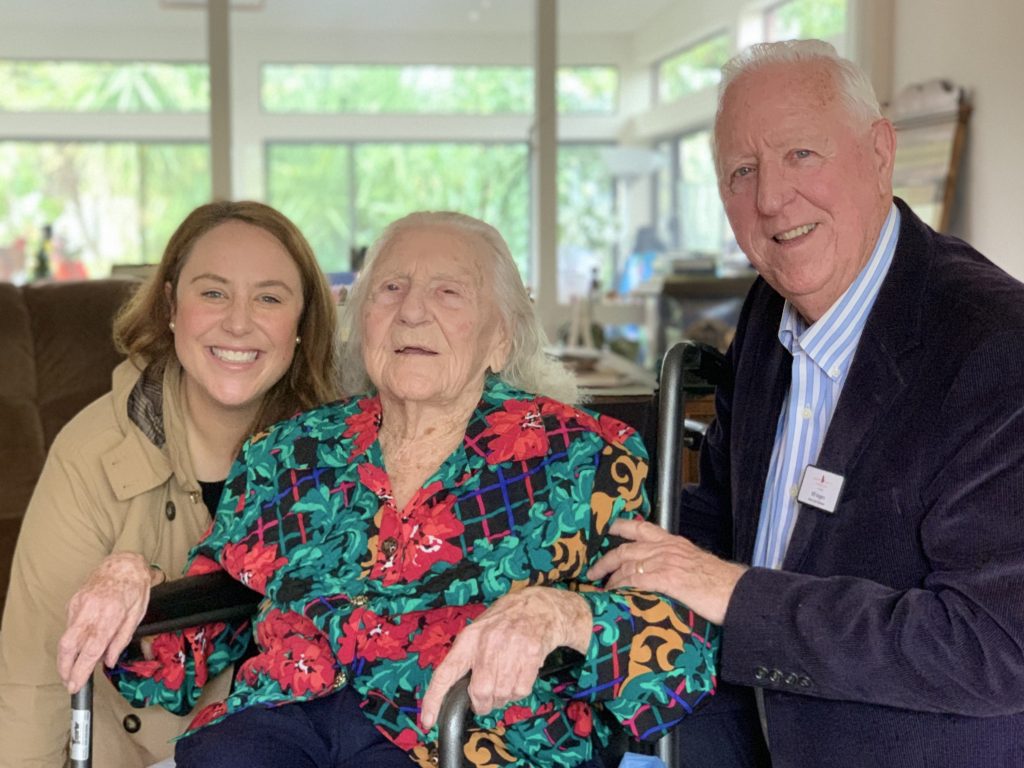 After her visit with John and Michelle, Tess heads north again to her patient in an assisted living facility in Burlingame. Harold, at 93, has congestive heart failure. In a single week, he moved into the facility and started hospice care – quite a change for the vibrant, independent man. Tess says that she visited weekly at first, to help him adjust to his new environment.
When he first moved there, she orchestrated a care conference with Harold and his children, the entire Mission Hospice team, and facility staff. Tess explains that “these meetings lay the foundation for the patient’s care, who does what, and making sure the family understands how we can support them. We are always there to advocate for the patient.”
The staff at Harold’s home now knows Tess well. As part of her visit with Harold, Tess observes and records his appearance, eating habits, and alertness.
Harold is a big sports fan, something he loves to share with his Mission Hospice volunteer – who just happens to be Tess’ dad Bill. The father-daughter duo often visit patients together. “It’s the biggest joy to be able to do this work together,” says Tess. “I think patients get a sense that they’re really being cared for – it’s a family thing.”
Her main objective is to help Harold review his life and prepare to die peacefully. Over the past few months, Tess has talked with him about his childhood and the many things he has accomplished. She’s also helping him through depression and grief from his wife’s death four years earlier. “My job is to hear his story, to witness and help him process his life.”
Back in the Mission Hospice office, Tess will finish her notes for these patients, plan tomorrow’s visits, make a few phone calls, and check in with her colleagues – an important part of her day. “Experiencing someone’s vulnerabilities is such an honor – but it can be difficult. It’s so helpful to be able to unpack that with a colleague who gets it,” she says.
“Ultimately, bearing witness to someone’s anger or grief is the biggest gift. That’s when I feel like I am really helping. That’s what is so rewarding about this work.”
Volunteer leader Sheila Young honored with 2020 Lotus Award
Sheila Young, long-time board member, donor, and all-around champion of Mission Hospice, will receive the 2020 Lotus Award at our 41st Anniversary Celebration in January. Created in 2005, the annual award recognizes individuals who have shown outstanding support of the organization.
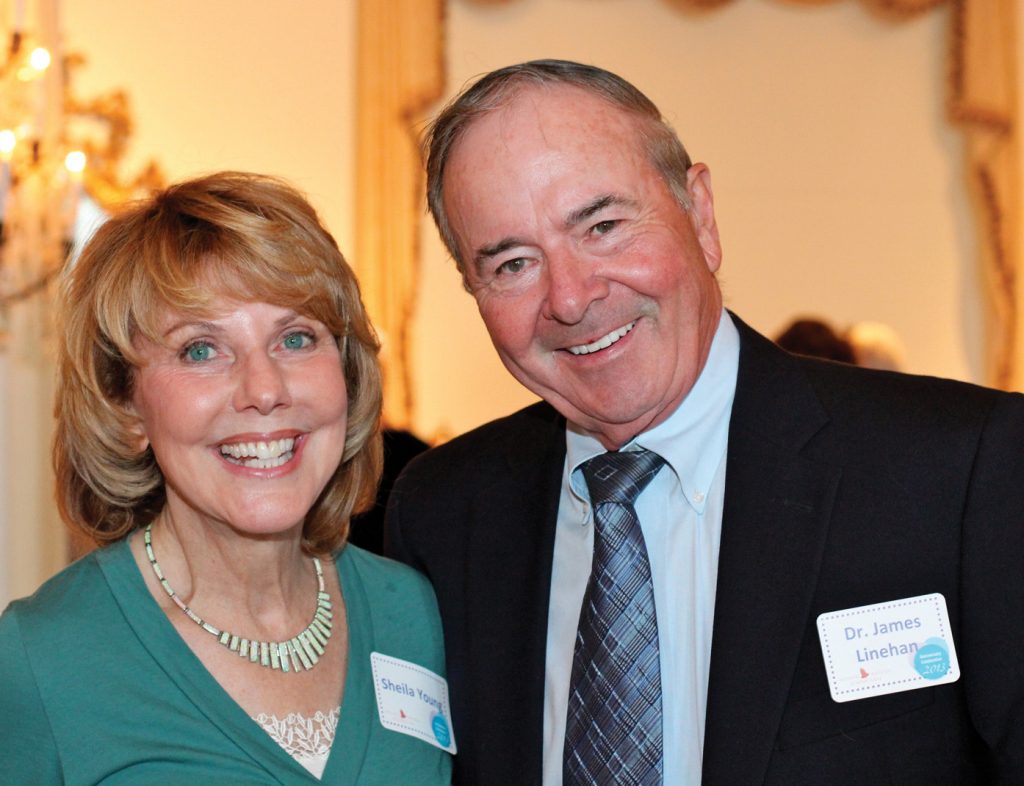 Sheila’s commitment to ensuring that our community has exceptional end-of-life care has been generous and unwavering. A real estate attorney, she served as a member of our Board of Directors from 2006-2019, was Chair of the Board in 2010-2011, and over the years served on the Executive Committee, Development Committee, Lotus Award Committee, and Nominating Committee. She is also a long-time member of the Peninsula Italian American Club committee that organizes the annual Night of Fun dinner-dance that benefits Mission Hospice patients.
“Mission Hospice has been and will always be one of my passions,” says Sheila. “In my time on the Board, I was lucky enough to work with a team of dedicated Board members, generous Auxiliary members, inspiring volunteers, enthusiastic donors, and an amazing and compassionate staff. I am so grateful for all of them.”
Lotus Award Committee chair Mary Chigos says that a number of people nominated Sheila for the award because of her long years of service, professional leadership, and generosity. “Over the years, Board Chairs who came before her and after her have called on Sheila for her insight and wisdom. She’s such a steady, conscientious person.” Sheila and her husband Jim Linehan have frequently offered their Hillsborough home for Mission Hospice functions.
Adella Harris, recipient of the very first Lotus Award, says, “There aren’t enough superlatives to do justice to Sheila’s long years of service to Mission Hospice. Her professional skills in real estate and law have been a real blessing. Her open-hearted philanthropy has been bottomless. She has done so much to advance the mission of our agency, and has done it with grace and humor.”
Bereavement team helps people through all kinds of grief
by Christine Kovach, LCSW, Bereavement Services Manager
April 2024
I have worked in grief support for many years, and I can say with certainty that the grieving process is different for each person and each loss. The one constant is that grief always takes time. Our grief support team helps families and loved ones through this process for many months in a variety of ways so that everyone can find the kind of help they need.
Grief is impacted by so many different factors. Some people – for example, those whose loved one is in hospice care – may have had time to prepare themselves for a death. Others experience a sudden, surprising loss. Grief can be especially intense for people with a limited support system, who have had multiple losses or other big stressors, or who have experienced a recent traumatic death.
At Mission Hospice, we are committed to going above and beyond what Medicare requires for grief support – and to support the entire range of grief. We offer short-term individualized grief counseling for the loved ones of our patients, as well as a wide range of grief support groups, workshops, and other special offerings open to the community.
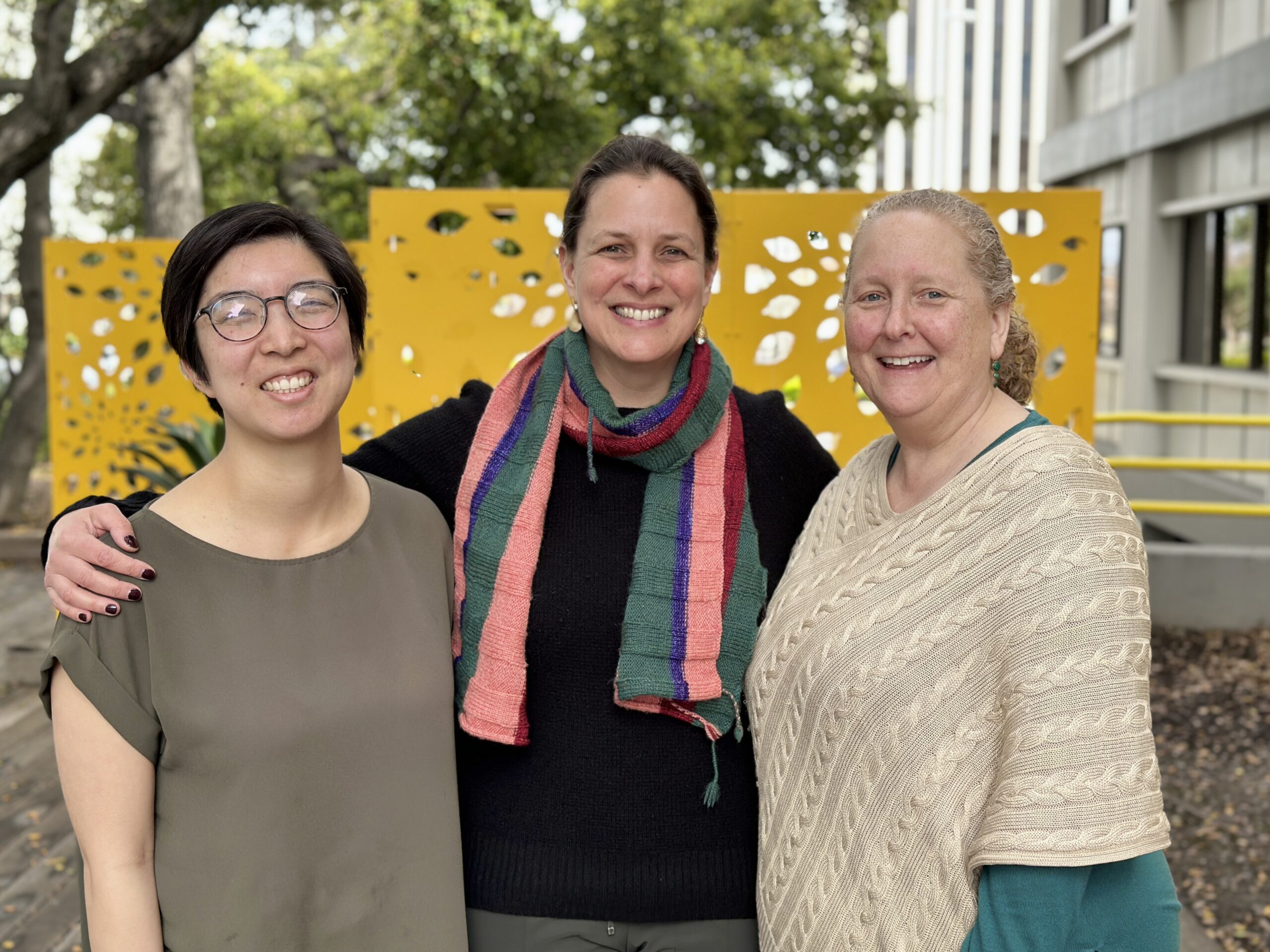 We do this all with our small but mighty team of three staff (I am joined by Bereavement Coordinators Delaney Woo, LCSW, and Kate Nitze, MSW) and a cadre of dedicated volunteers, including counseling associates and student interns, retired therapists, social workers, and nurses, and other trained bereavement volunteers. I am inspired daily by their commitment and creativity. Working with this team is magic – I’m in the wonderful position of saying “YES, let’s do it.”
It is our goal to care for people throughout our community, regardless of how or why they need grief support after the death of a loved one. This also means offering different modalities of support – whether it is in-person or online, and whether based on group discussion, individual counseling, physical movement, or creative and expressive arts.
Our bereavement program is expansive, ambitious, and inclusive. Not everybody wants grief counseling. Not everybody wants to be in a traditional support group. Some people benefit from a creative arts or writing process. Others are soothed by somatic care. We’re always thinking about new ways to help people heal.
Recent and upcoming programs – many supported by grants from Sandhya’s Touch – include workshops on Drumming for Grief, Art for Healing, SoulCollage®, Writing Through Loss, and sound healing, which uses vibrations from gongs and singing bowls to help participants regulate their breathing. The imagery and metaphor in these workshops can help people to allow for embodied engagement with grief and to work with grief expression in a symbolic way. None of these workshops require any experience – just a willingness to explore with a creative process.


 Community funding and partnerships allow us to reach people in new ways. For example, the San Bruno Community Foundation sponsors an in-person grief support group at the San Bruno Senior Center. We have a partnership with the senior center Avenidas in Palo Alto to create a public ofrenda (altar) and some unique programs for Día de los Muertos (Day of the Dead). In December, we partner with Compassionate Friends to cohost the Worldwide Candle Lighting, bringing light into the darkness of grief. For several years, our Spiritual Counselor Rachel Rosenberg has led a memorial service at the Pacifica Senior Center. And of course, Mission Hospice holds our annual public memorial service, Season of Remembrance, in May.
There is a lot to grieve in the world right now, and these programs let us bring people together to acknowledge our own personal grief and provide an outlet for the collective grief we’re all holding.
Grief often doesn’t go away completely, but rather changes in intensity over time – and everyone needs different support at different times. Some people are ready to talk about it right after their loss; others are ready at the anniversary of the death. Sometimes a death throws people into financial challenges or into the work of managing an estate, and they can’t begin to think about their broken hearts right away.
What I love about Mission Hospice is that our whole team is committed to offering a range of support so that no matter what your circumstances or experience, when you are ready – we are here for you.
Our events calendar lists upcoming support groups and workshops. You can find videos of past programs on our YouTube channel.
Auxiliary aims to make 2018 Fall Gala, Diamonds & Denim, the best yet
Once a month, the Mission Hospice office is filled with refreshments and an extra boost of energy when our Auxiliary volunteers come in for their monthly meeting. This group is dedicated to putting on fun community events that raise funds to support Mission Hospice. They enjoy a lot of laughs while they work hard for a serious purpose.
Right now, they are gearing up for their biggest event ever – the September 29 Fall Gala, Diamonds & Denim, featuring the popular soul dance band Pride & Joy.
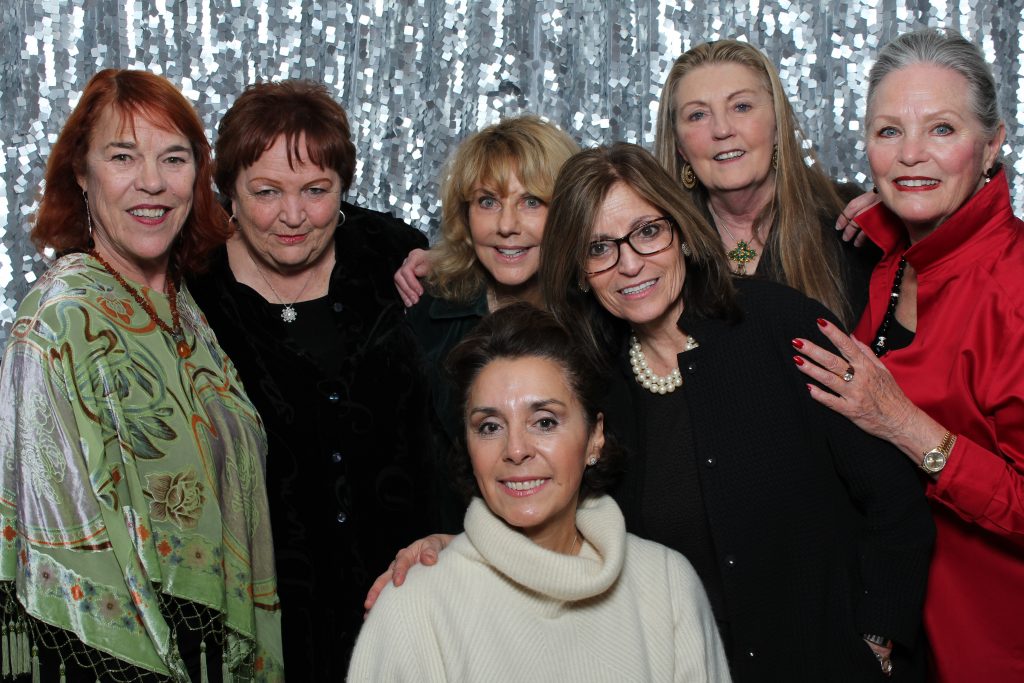 “We’re so excited about this year’s gala – it really is a celebration of community,” says First Vice President Yolanda Crosby. “Our goal is to have 400 attendees all out there dancing!”
The Auxiliary has been working for months to plan the evening. They’ve lined up a professional auctioneer and some great auction items, including a cruise through Croatia and Greece, a week in a restored Italian farmhouse, and other unique experiences and collectibles. Thanks to sponsorships from organizations and individuals throughout the community, the Auxiliary is hoping to meet their goal of raising a record $300,000, which will support our hospice house campaign.
The gala is one of two major fundraising events the Auxiliary plans each year. Their annual Bridge Day and Luncheon is a quieter affair – but just as filled with community participation.
Planning these and other events, of course, takes a significant amount of volunteer-power, and the Auxiliary is seeking new members. President Vibeke Gade says, “We’re looking for people who are well-connected in the community, like to fundraise and plan events, and want to do something meaningful.”
Auxiliary members are passionate about the patient care that their events support. Second Vice President Ann Nolan explains, “Mission Hospice provides a critical service for our community – something my family experienced firsthand. Being part of the Auxiliary, I can help ensure that this kind of care is available for all who need it.”
Buy tickets for the Gala here!
Mary Chigos receives 2018 Lotus Award
Dedicated leader recognized for service as board member, fundraiser, outreach nurse, and more
Perhaps no one has worn as many hats at Mission Hospice as Mary Chigos. A Nurse Practitioner, she joined our board in 2002. Mary has served as Board Chair, long-time Development Committee Chair, and – most recently – the Co-Chair of our successful Hospice House Campaign. And when the organization had need for her professional skills on staff, in 2011 she joined our Clinical Outreach team, educating and connecting with local health care providers and potential patients.
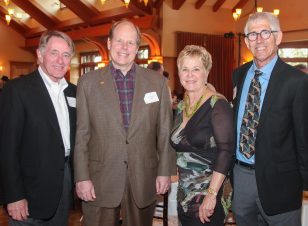
Board Chair Dr. Steve Weller, Peninsula Health Care District Board Treasurer Dennis Zell, 2018 Lotus Award winner Mary Chigos, and CEO Dwight Wilson.
Regardless of her role, Mary is quick to share a hug, a joke, or words of encouragement. A well-known community volunteer, she jumps in wherever help is needed, and always goes the extra mile.
Mary’s long-time dedication to Mission Hospice earned her the 2018 Lotus Award, presented at our 39th Anniversary Celebration in January.
“Mary represents some of the best of Mission Hospice,” says Lotus Award Committee member and Board member Sheila Young. “Her compassion makes her loved by her patients; her wisdom and humor makes her loved by the Board.”
The Lotus Award is given to someone who has shown outstanding support of our organization. Mary’s many years of passionate leadership made her a shoo-in for the award, but selecting her took some amount of stealth.
“As Committee Chair, Mary had always stopped any discussion about her potential receipt of this award,” says Sheila.
“This year, the Committee members were able to schedule a Lotus Award Committee meeting when Mary was out of town, and she was our unanimous choice. Next, the Board was able to approve the selection without Mary’s presence. The secret was safe until we lured her to a lunch to announce the good news.”
Mary’s commitment to hospice and palliative care – and about our community’s need for a hospice house – infuse everything she does. She has a comprehensive understanding from both a clinical and personal perspective, and she is eager to share this with others.
“Mary has a deep emotional commitment to Mission Hospice,” says Dr. Steve Weller, Board Chair and Co-Chair of the Hospice House Campaign. “She never hesitates to take on new challenges for the good of our organization, and takes great pride in the excellent care and leadership we provide to the community.”
Michael Teutschel and Dr. Gary Pasternak receive awards for service
February 2017
At last month’s 38th Anniversary Celebration at the Sharon Heights Golf & Country Club in Menlo Park, Mission Hospice honored two people who are very special to our organization and our community.
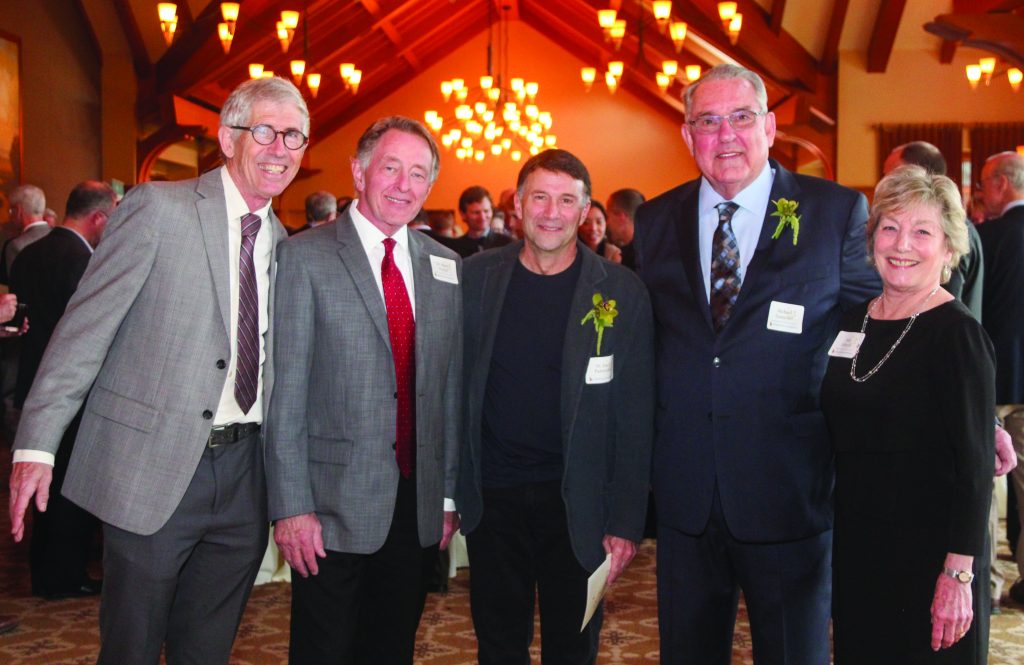
Special Recognition Award winner Dr. Gary Pasternak (center) and 2017 Lotus Award winner Michael Teutschel (second from R) with (L to R) CEO Dwight Wilson, Chair Dr. Stephen Weller, and past Chair Judy DiPaolo at our 38th Anniversary Celebration.
The Lotus Award, created to recognize individuals who have shown outstanding support of the organization, was presented to Michael Teutschel. Mike has served on our Board of Directors for well over a decade, and just completed a term as co-Treasurer.
Lotus Committee member Sheila Young says that Mike was nominated for the award by a number of people and was the committee’s overwhelming favorite.
For years, says Sheila, “Board Chairs have turned to Mike as the go-to person for advice and input. He has excellent judgment and wisdom, and an invaluable ability to see all issues clearly.”
Sheila says Mike’s board colleagues respect his calm leadership. “He listens respectfully, hearing all sides. When he speaks up, people listen. He is a skilled communicator, a peacemaker, and a clear thinker,” she continues. “His ability to synthesize really helps the board come to an understanding on complex topics. And he does this all with a great sense of humor!”
Mission Hospice also presented Medical Director Dr. Gary Pasternak with the Special Recognition Award.
Committee Chair Mary Chigos, RN, says that Dr. Gary is respected throughout the community for his compassion and patient-centered care. His leadership in hospice and palliative care extended to his vision for the hospice house, which was key to inspiring others to support the project.
“People are sometimes afraid of hospice,” says Mary, “but Dr. Gary shows them that they can gain control over their final months, based on their own wishes. He always starts by asking what the patient wants. Dr. Gary is known for going the extra mile for his patients.”
The Mission Hospice family thanks both Mike and Gary for all that they do for the organization and our patients.
2016 Gala breaks fundraising record!
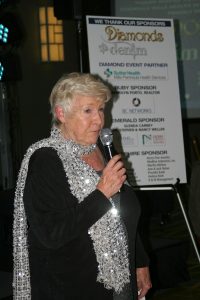 Many thanks to those who attended the Mission Hospice Auxiliary’s 2016 Fall Gala, Diamonds and Denim, for a fun and successful evening. The event raised more than $174,000 to support our Hospice House Campaign – a new record!

Thank you to Event Co-chairs Martha Melton and Yoli Crosby and their entire committee for a festive evening with some great auction items, a delicious dinner, and a crowded dance floor.
Thanks to the generosity of Carl Ward Photography, you can see lots of wonderful photos in the event photo album.
Special thanks to the major sponsors of the 2016 Gala:
Mills-Peninsula Health Services
Marilyn Porto, Realtor
BC Networks
Glenda Carney
Dr. Stephen & Nancy Weller
CHME, Inc.
Crosby-N.Gray & Co.
Keeping vigil: Being present in someone’s final hours
There are times in our lives when we don’t want to be alone – for many of us, this includes when we are dying. Our vigil program allows us to accompany patients so they are not alone in the last day or two of life. A vigil might allow family members to get some sleep, enjoy a meal, and take a break. For those who don’t have loved ones by their side, a vigil can provide the kind of comfort that can only be offered by another human being.
 “Our goal is to create a safe, peaceful, supportive environment for our patients,” says Volunteer Coordinator Rani Ferreira, who manages the vigil program.
Vigilers offer companionship and presence. They might dim the lights, share quiet music, read, or simply sit and hold the patient’s hand. Like all of our care, it’s as individual as our patients.
Some vigils are held overnight to allow family members to get some much-needed rest. For patients with no one by their side, vigils might last for several days, with vigil volunteers tagging in for two-hour shifts, offering around-the-clock support. Vigils are wherever our patients are – anywhere from San Mateo to Half Moon Bay to Millbrae to Palo Alto, in a patient’s home or a care facility.
Coordinating a vigil is no small task. When a need arises, Rani puts the word out via email to more than 50 trained vigilers. Once volunteers respond – and they do, even with short notice and middle-of-the-night timeslots – the vigil begins.
Each vigiler interrupts his or her life to bring comfort to a perfect stranger. Some drive 45 minutes to be with someone in need. One volunteer takes the bus at 11 at night – and home again at 1am. Others volunteer for late-night shifts despite demands of work and their own families.
For a patient whose sister lives across the country and couldn’t be with her, Mission Hospice vigilers sat by, read, and prayed with her. And they helped her reach her sister by phone for their last conversation, bringing them both a sense of peace.
Another team vigiled for a 77-year-old woman whose large, loving family felt anxious and unprepared for her death. “The vigilers really helped the family understand what to expect,” explains Rani. ”And they were so grateful that the vigil volunteers were with their mom, so they could come and go as they needed to.”
In Mission House, vigilers accompanied a man with end-stage Alzheimer’s. After nearly a dozen volunteers had taken their turns, the last vigiler knew that the patient’s wife and son were on their way to the house. When her shift was up, she stayed by his side so that he was not alone, comforting him as he passed away, peacefully, before his family arrived.
This is the kind of care for which Mission Hospice is known, and the community knows what a difference it makes. Elizabeth, an experienced caregiver at Millbrae Board & Care Home, was moved by seeing our vigil teams in action. “I’ve worked with hospice patients for 14 years,” she says. “I’ve never seen anything like the compassion, presence, and love you all have shown.”