
Home health aides share love of sports and patient care
April 2024
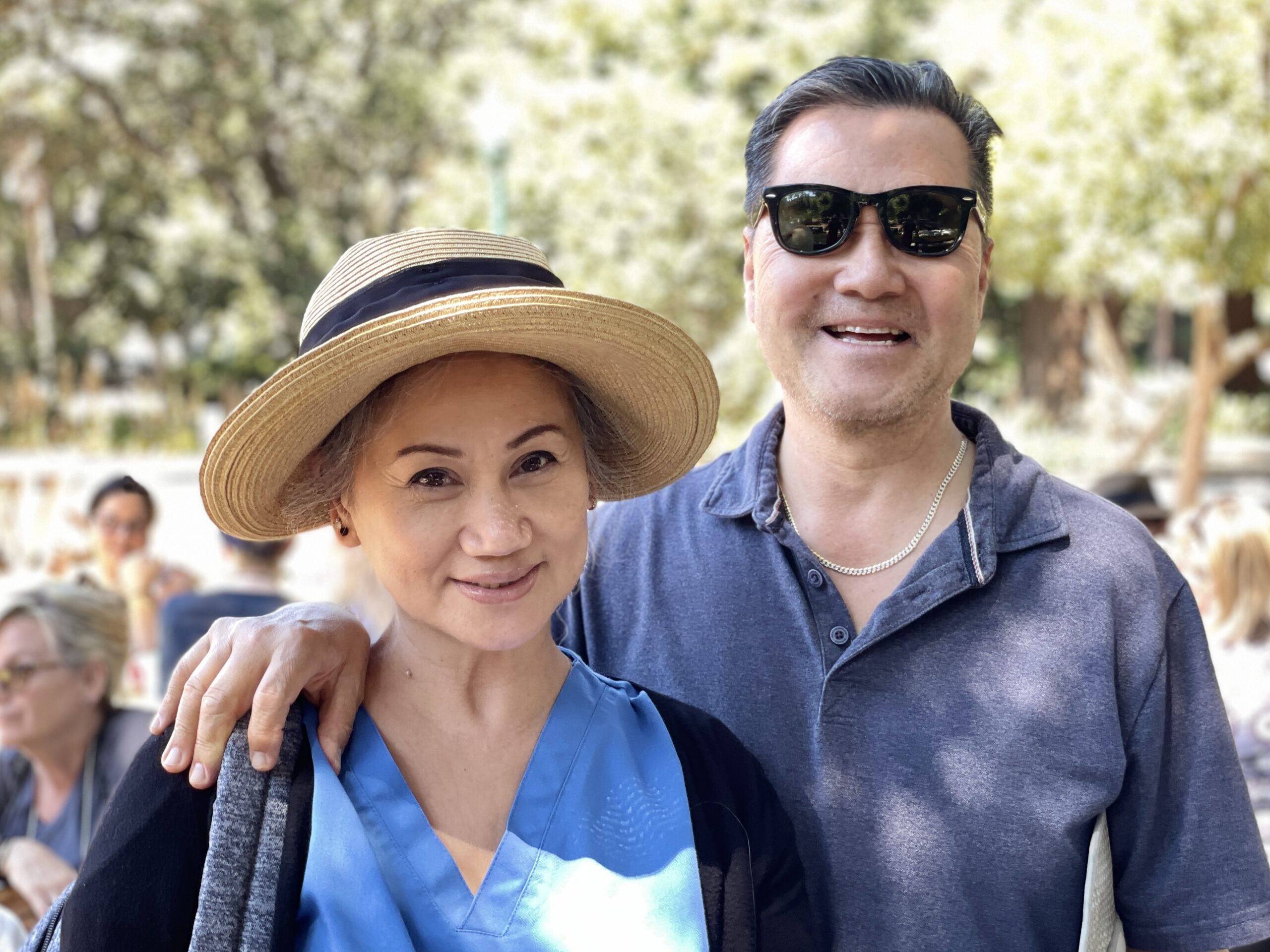 In any given conversation, both Tommy Joe and Gina Yamsuan are likely to bring up sports. They’re avid fans of all the local teams – Warriors, Giants, Niners – and more. The couple met and started dating when they were both working as home health aides (HHAs) at another hospice agency and found that their passion for sports was matched by their enthusiasm for their work.
Gina, who joined Mission Hospice more than 10 years ago, has been in health care most of her career; she loves having her own schedule and the flexibility that hospice offers. Tommy came to this work after a career in real estate. He switched careers after his mom became ill in 2000 and received hospice care. He became Mission Hospice’s first male HHA about six months after Gina joined the team.
The two of them, like all of our HHAs, travel throughout the Peninsula and South Bay to provide personal care to patients – bathing, hair care, dressing, transferring (helping patients move), and more. Tommy says he always thinks about what kind of care he would want if he were in the patient’s situation. “I like to picture myself in their shoes.”
“We always look forward to coming to work,” says Gina. “We actually help people. We make them happy, and they look forward to seeing us. They are so appreciative.”
Tommy and Gina both say they can’t imagine not working together. “It’s great doing the same job,” says Tommy.
“We can share our days, good or bad.”
“Tommy and Gina are very devoted to their patients and attuned to their needs,” says Hospice Clinical Manager Sue Kensill. “They truly get to know the families they visit, and they go the extra mile to provide patients comfort and dignity.”
Home health aides typically see patients two to three times per week. In addition to providing personal care for people, they teach their primary caregivers how to safely manage transfers, bathing, catheter maintenance, and more. “Doing this work,” says Gina, “we get really close with the family members too. They are so grateful for what we’re doing.”
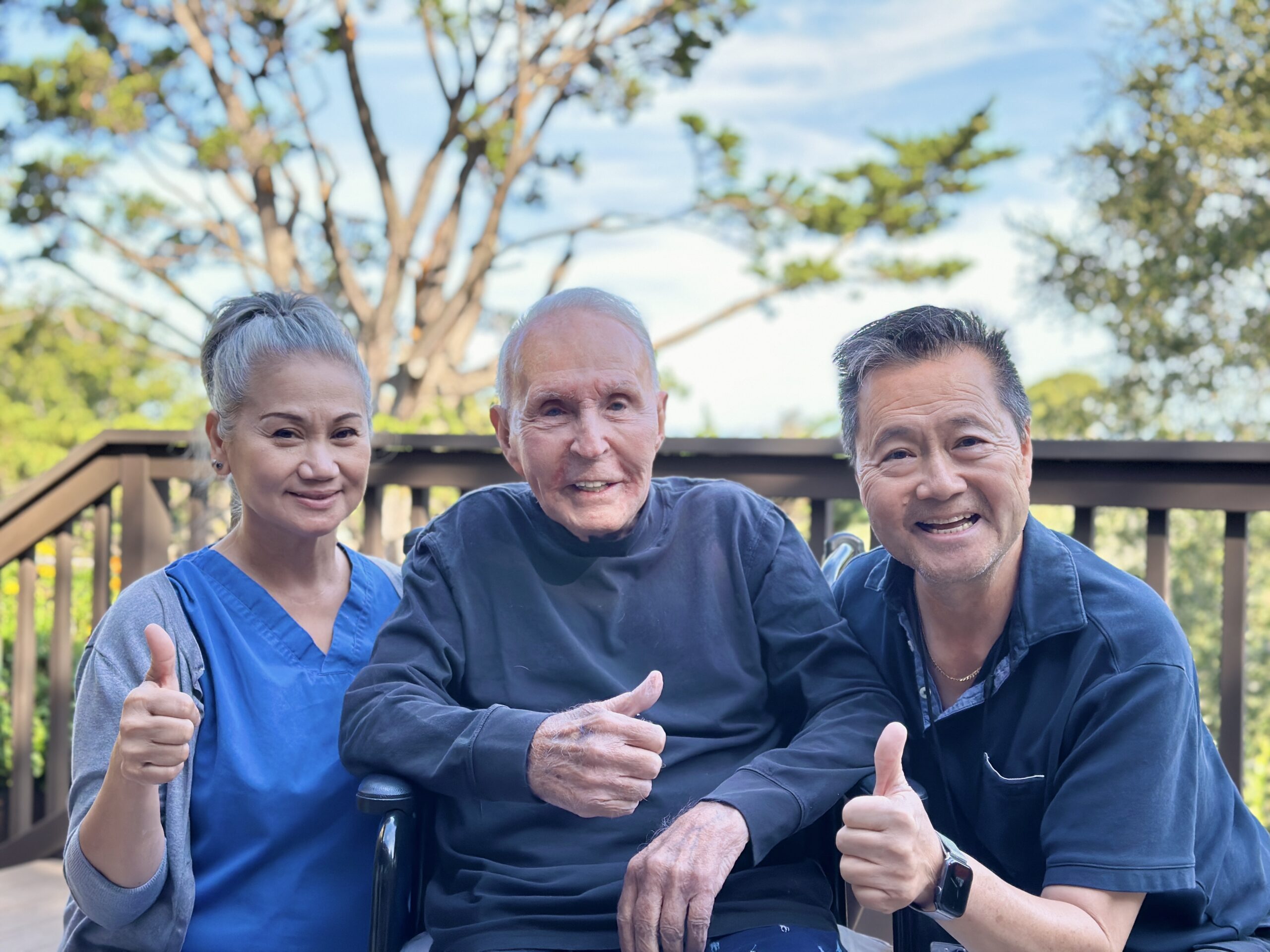 Since last September, Tommy and Gina have been visiting 91-year-old Martin in Menlo Park. Although Martin and his wife Priscilla were initially reluctant to have anyone in their home, they quickly hit it off with their Mission Hospice team – especially Tommy and Gina. Martin, as it turns out, is a former Golden Glove boxer with connections throughout professional sports and sports memorabilia throughout the house. “He knows everybody – all the players and coaches,” says Tommy. “Our conversations about the week’s games are a highlight for both of us. I have met a lot of clients, but Martin is very special.”
Martin’s wife Priscilla is grateful for the support the team offers. “Mission Hospice has been a godsend – it’s taken a weight off of me. Our nurse, Tommy and Gina, and our volunteers all visit every week. It helps me, and it gives Martin the stimulation of having someone else visit. I now see that hospice is about living life better – with help!”
Both Tommy and Gina love the connections they are able to make with people like Martin and Priscilla. “I can tell by the photos in the house what their interests are,” says Tommy. He remembers one patient who was slow to warm up to him, but when they started discussing the patient’s classic Thunderbird, they bonded over their love of cars. “We love to listen to the patients’ and families’ stories,” says Tommy. “It’s not work for us – we love it.”
Together, Tommy and Gina make quite a team. Their positivity radiates as they finish each other’s sentences. And they are always looking for special ways to bring joy to patients. One man was “grumpy” until Tommy started bringing him his favorite frozen drink, which he couldn’t get in his care facility.
“People say we’re the highlight of their day,” says Tommy. “They don’t realize it makes our day too. It’s a little perk we get – to see their joy.”
Craig Schroeder puts the heart into volunteer support
 March 2023
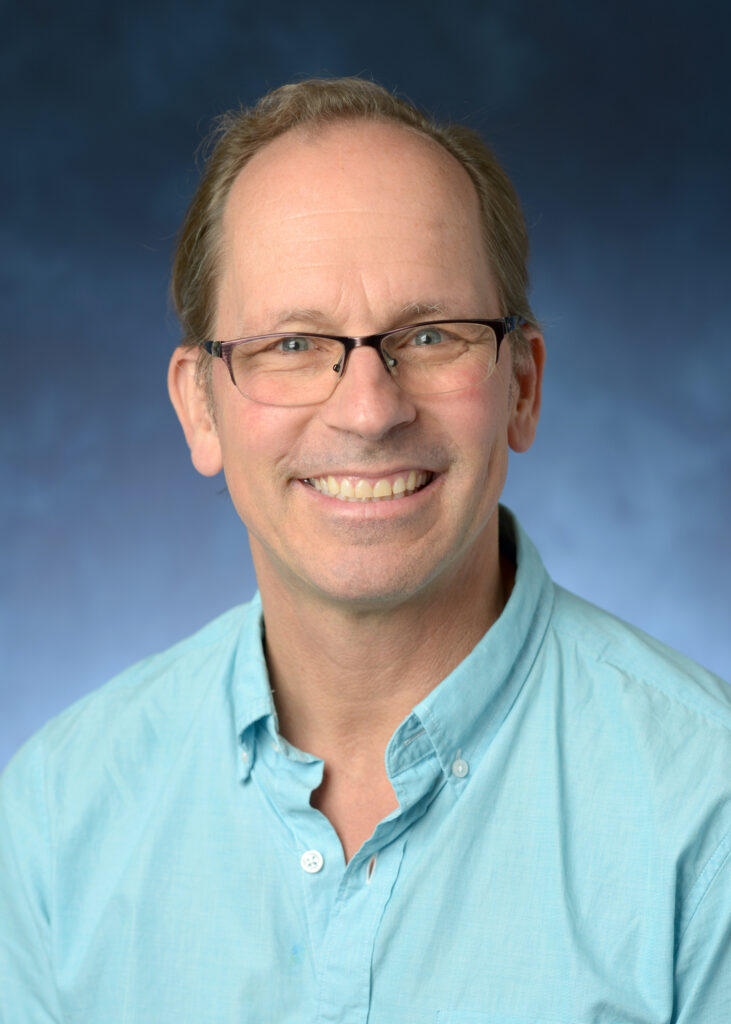
Over a decade ago, Craig Schroeder was ready for a career change and had applied to nursing school to become a trauma nurse. His friend Dr. Gary Pasternak, who had been working with Mission Hospice for several years, suggested that Craig would get valuable experience by volunteering. Craig completed his volunteer training in 2012 and dove right in, telling Volunteer Director Hank Nourse that he wanted three patients at a time.
He remembers fondly one particularly special patient he visited for nearly a year: Helen Lagen, who co-founded Mission Hospice in 1979. The pair became close friends.
Helen, who was bedridden, loved being outside in her garden. Each time he visited, Craig moved her to a gurney and took her outside where they sat together and talked. “It was an honor and a privilege to visit Helen. It was like taking care of my grandmother again. I learned so much about Mission Hospice.”
The experience of volunteering changed the trajectory of Craig’s life. Instead of heading to nursing school, in 2015 he joined the Mission Hospice staff as a Volunteer Coordinator – and when Hank retired three years later, Craig became our Volunteer Services Director.
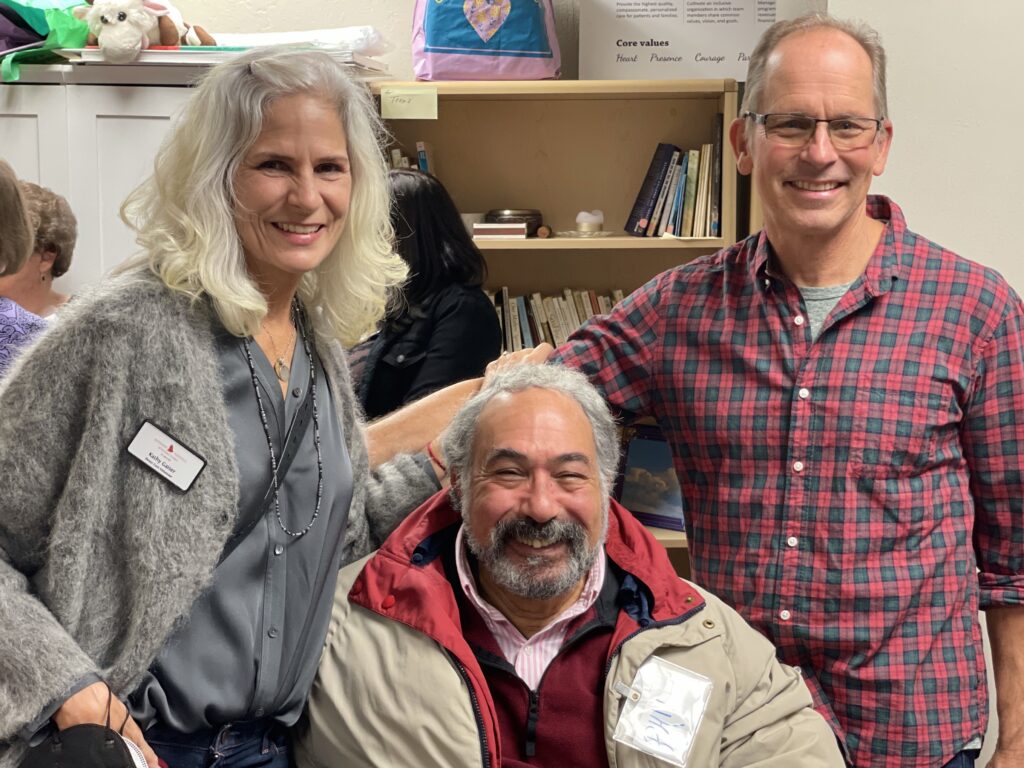
Together with Volunteer Coordinators Jennifer Guevarra and Constance Sweeney, Craig now supports around 130 volunteers who work throughout the Peninsula and South Bay. He leads an intensive 26-hour volunteer training twice a year, holds monthly volunteer support meetings, and offers volunteers continuing education and special training.
Craig explains that the Mission Hospice training is unique: while most hospice agencies rely on computer-based virtual training and testing, Mission Hospice volunteers are taught by our own experts, based on our philosophy of care.
“The throughline is heart-centered communication, listening, and compassion at the bedside.”
Craig certainly brings his heart to the program. A trained chef, he prepares and serves lunch to the volunteers at each of the Saturday training sessions. “No one goes hungry around me,” he says proudly.
Craig sees this kind of above-and-beyond support for volunteers as a part of our personalized approach. “Our volunteers support patients and families at the most transitional, intimate, and difficult time of life,” says Craig. “They need good training and good support to do their job. Our volunteers really make our organization stand out – they are the heart of Mission Hospice.”
Long-time volunteer Paul Smith says the feeling is reciprocal. “Craig makes each volunteer feel that they matter, and he gives you his complete attention and focus. He leads by example, and is sincere, insightful, supportive, and a total believer in the work we are all doing.”
Volunteers come to Mission Hospice from all over and for all kinds of reasons, and Craig has expanded the program to include high school and college students. All volunteers are trained to leave whatever’s going on in their life – good or bad – at the door. “The patient and family get to set the agenda,” he says. “The volunteers bring the magic.”
To make this magic happen, Craig and his team put a lot of thought into the match between a volunteer and a potential patient – each one unique. “We think about the patient and their needs, as well as the volunteer’s skills and experience,” he says. “A patient and family have only one chance at dying, and the match has to work for everyone.”
Craig says he is proud to be able to support our volunteers and – through them – our patients. His leadership is personal and heart-centered. “Everyone has a story,” he says. “Everyone has triumphs and losses in life. And everyone deserves respect, kindness, and compassion.”
A day with a social worker: compassion and support for families
Listeners, problem-solvers, advocates, and much more, social workers wear many hats. Mission Hospice social worker Elizabeth (Tess) Rogers says that her job is “pairing what resources and support are available with what families are ready for.”
Tess aims to see each of her patients every two weeks, or more often as needed – patients’ needs may change over time. Some days Tess visits three or four patients; other days she spends more time making calls, faxing paperwork, or following up on MediCal or VA benefits.
“While nurses and physicians help with physical pain, we can help with emotional pain, resources, and counseling – for patients and families,” Tess explains. “Our job is to hold space for everyone to express their feelings, their fears, and their wishes, and to be the mediator as needed.”
On a recent day, Tess started with a phone call from a nurse who needed some advice about how to assist a struggling family. “It’s part of our job to support our fellow team members,” Tess explains. “We have such a supportive, compassionate team – we all have each others’ backs.”
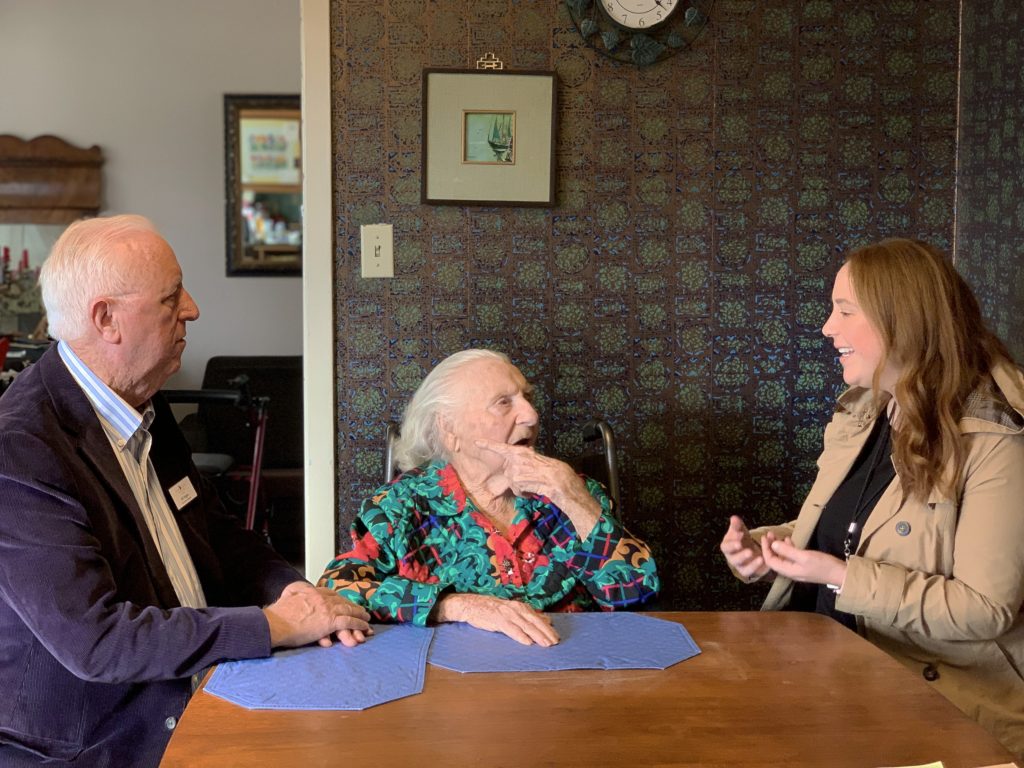 By the time this conversation has finished, Tess has arrived at the Millbrae home of her first patient.
Opal, a retired professor with Alzheimer’s disease, recently turned 102, and Tess brings with her a small box of doughnuts to celebrate. She’s welcomed like family by both Opal and her caregiver.
With her wheelchair scooted up to the dining room table, Opal eats breakfast while Tess visits. Warm and gentle, Tess asks Opal about her childhood on a Mississippi farm, skillfully working in questions about her pain level and mood.
“Is there anything on your heart that you want to talk about?” Tess asks. Opal says she wouldn’t change a thing about her life, something Tess says is a good reminder of staying in the present and expressing gratitude.
Tess also reassures the caregiver that she’s doing a good job. “Part of my role is to encourage the patient and family, to let them know that they can do this,” she says.
While stopping for a second cup of coffee, Tess makes some notes about the visit for other members of the care team. And later, she will – as usual – call Opal’s daughter Pam with an update. She explains: “Sometimes I work more with the family than with the patient. A lot of our work is helping families accept what is happening, while acknowledging their pain, grief, and sadness.”
Tess’ next stop is at the Redwood City home of John and Michelle. When John, who has prostate cancer, started hospice care, his wife was reluctant to accept social work support. After Tess offered to stay with him so Michelle could attend her church meetings, that built trust that allowed Tess to provide even more meaningful support to the family.
Tess explains that much of her work with this family has been counseling. “Both of them were angry about John’s disease. I was able to help them talk through it so that they could project their anger onto the disease, and not each other.” Tess also facilitated family meetings with their two adult daughters, who wanted to be more involved in care and decisionmaking.
Today, Tess talks to John about his veterans’ benefits, which she facilitated so that he could get the VA caregiver he had earned. Helping people navigate benefits and find resources is an important part of the social work role.
Only partly joking, Tess says that social workers are “the forms people.” In addition to helping people navigate insurance benefits, MediCal and Medicare, and paid family leave, they help people complete Advance Health Care Directives and review their POLST forms.
Social workers also help navigate care at a very practical level. “We can start the conversation about where the best place is for care. We help determine whether the patient is safe in the home, or needs care beyond what family members can provide.”
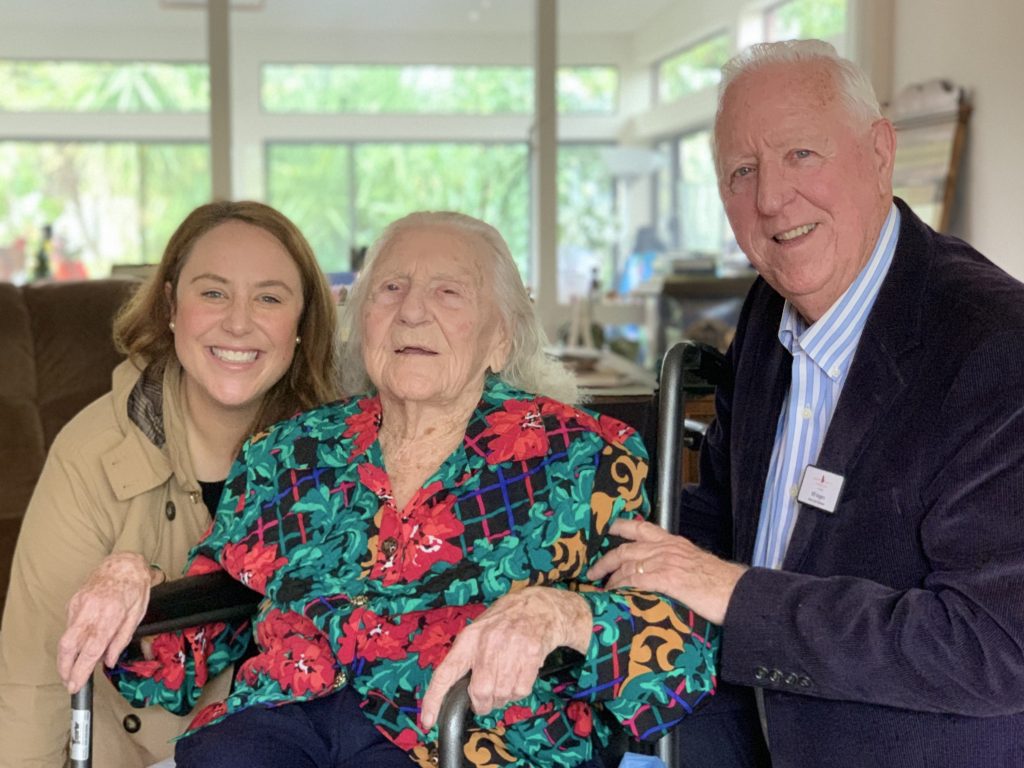 After her visit with John and Michelle, Tess heads north again to her patient in an assisted living facility in Burlingame. Harold, at 93, has congestive heart failure. In a single week, he moved into the facility and started hospice care – quite a change for the vibrant, independent man. Tess says that she visited weekly at first, to help him adjust to his new environment.
When he first moved there, she orchestrated a care conference with Harold and his children, the entire Mission Hospice team, and facility staff. Tess explains that “these meetings lay the foundation for the patient’s care, who does what, and making sure the family understands how we can support them. We are always there to advocate for the patient.”
The staff at Harold’s home now knows Tess well. As part of her visit with Harold, Tess observes and records his appearance, eating habits, and alertness.
Harold is a big sports fan, something he loves to share with his Mission Hospice volunteer – who just happens to be Tess’ dad Bill. The father-daughter duo often visit patients together. “It’s the biggest joy to be able to do this work together,” says Tess. “I think patients get a sense that they’re really being cared for – it’s a family thing.”
Her main objective is to help Harold review his life and prepare to die peacefully. Over the past few months, Tess has talked with him about his childhood and the many things he has accomplished. She’s also helping him through depression and grief from his wife’s death four years earlier. “My job is to hear his story, to witness and help him process his life.”
Back in the Mission Hospice office, Tess will finish her notes for these patients, plan tomorrow’s visits, make a few phone calls, and check in with her colleagues – an important part of her day. “Experiencing someone’s vulnerabilities is such an honor – but it can be difficult. It’s so helpful to be able to unpack that with a colleague who gets it,” she says.
“Ultimately, bearing witness to someone’s anger or grief is the biggest gift. That’s when I feel like I am really helping. That’s what is so rewarding about this work.”
Home health aides are a healing presence for patients and families
Our home health aides (HHAs) often spend more time in patients’ homes than anyone else on the care team. Many times, they become trusted friends and confidants, developing close relationships with patients.
HHAs are caregivers, personal attendants, teachers, companions, and much more. They help patients get in and out of bed, bathe, and wash their hair – even if the patient is bed-bound. They change linens. They can offer light massage and apply lotion, which many people find soothing.
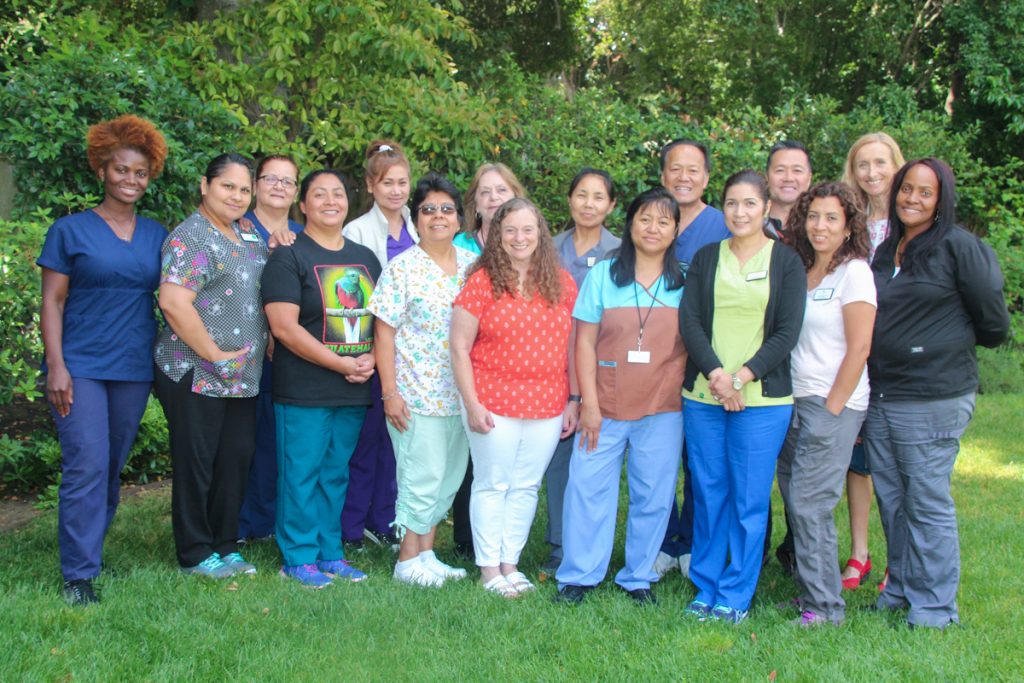 “Our HHAs teach families how to look after their loved ones – most of them have never done this kind of care before,” says Elle James, HHA Manager and Senior Nurse Educator. “Most importantly, they help patients maintain their dignity and feel cared for.”
Our agency currently has 25 home health aides, each with years of experience. To a person, they say that one of the things they love about working at Mission Hospice is that they are given the time they need to be fully present.
Ana Juarez says this means “we can give the patient our time and attention. We don’t have to rush. And we are trusted to know what is best for the patient.”
A visit from an HHA can be something to look forward to, especially for patients who are house-bound. As Tommy Joe says, “we can be the highlight of their day.”
His colleague Mitch Park concurs. “I ask them to share their stories, and that’s what they look forward to. They could do without the bath!”
Finding a connection with a patient is a good way to establish rapport and trust. Tommy says that he is often able to connect through sports. “It gives us something to talk about and share,” he says.
Mitch agrees. “Usually when someone has a terminal disease, people treat them differently,” he says. “I walk in and I say, ‘Did you see the game last night?’ It’s like a breath of fresh air for them.”
JoGrace Kotico sometimes connects with people through music. She remembers a patient who had served in the Army, who really liked the national anthem. “He wanted me to sing that to him as I cared for him,” she said, laughing about the difficulty of the tune. “I practiced in the car on the way to his house! And on the day he died, I was holding his hand and singing to him.”
These kinds of connections are one reason Mission Hospice is committed to keeping the same care team around patients who move between programs – say, from Palliative Care to Hospice. At a time when so much is changing in their lives, we can offer patients and families the comfort and stability of trusted relationships.
“We talk a lot about not just the physicality of the home health aide role, but the humanness of it,” says Elle. “They do so much more than just provide care. Our HHAs are a healing presence.”
Rounds with a hospice nurse: Compassion in action
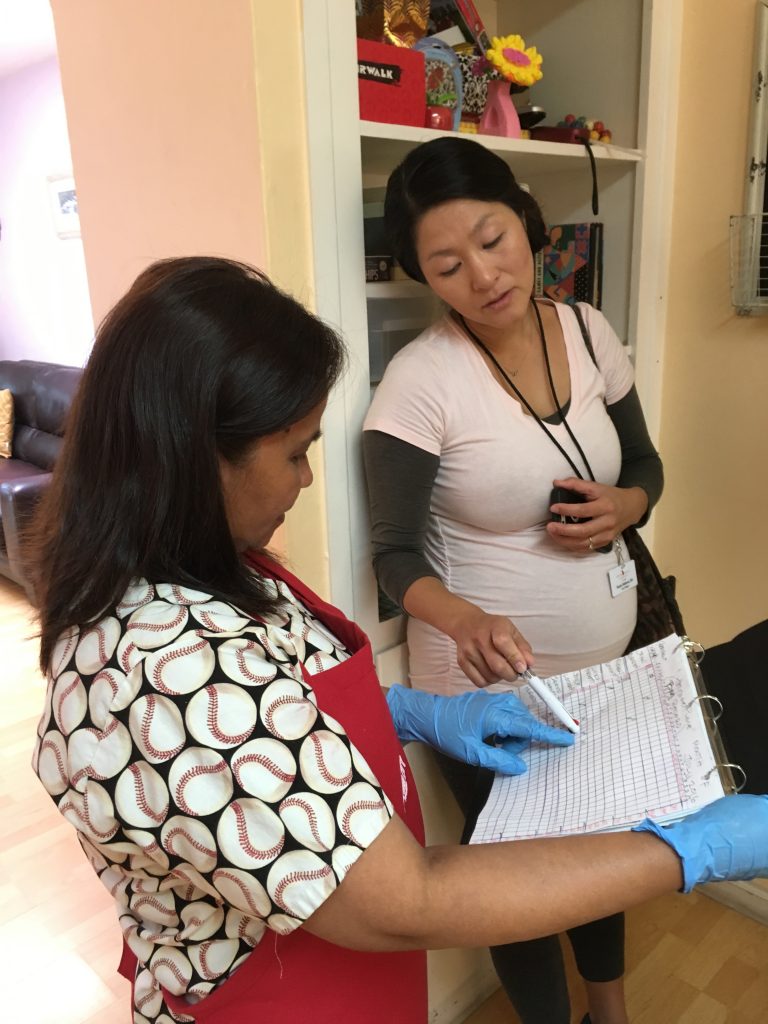 When you’re a hospice nurse, each day is different. The schedule, your patients, and their needs vary; the one constant is compassion.
Mission Hospice RN Case Manager Naoko Ishikawa sees each of her 12-16 patients at least once a week, and more often if their symptoms call for it. She shares the details of a recent day in which she visited five patients.
Her morning starts with a call from Donald, whose mom, Grace – one of Naoko’s patients – had fainted. Naoko heads straight to Grace’s assisted living facility in San Mateo. Donald meets her there, and they review the events with Grace’s caregivers. “We work as a team,” Naoko says, and the trust between them is obvious.
In her 90s, Grace is in bed, frail but conversant. Naoko squats down to look in her eyes. Grace seems reassured by Naoko’s presence, and reports that she feels fine. Naoko takes Grace’s blood pressure, which is strong. She’s confident that Grace’s fainting spell was caused by constipation. Naoko texts Dr. Salpeter to ask about adjusting Grace’s medication to address the issue, and immediately gets the go-ahead.
Naoko gives the caregiver the new instructions, notes this in the patient’s chart, and checks to see that the supplies she’d ordered last week were delivered. An hour later, after making sure Grace is comfortable, Naoko heads to Redwood City to see her first regularly scheduled patient.
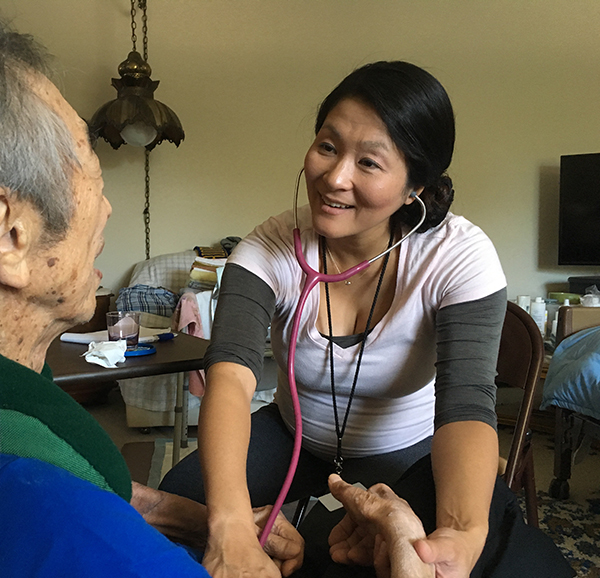 Sharon is thrilled to see Naoko for the second time this week. Almost 90 years old, her husband Herbert has been in hospice care for nine months, and the family has developed a close relationship with their Mission Hospice team. “I’m always relieved when Naoko comes,” Sharon says.
Herbert is watching TV in the living room, and Naoko scoots a chair up close to him. “What did you eat this morning?” she asks. “How is your stomach feeling?” His voice is quiet; he is wheezing, and hard to understand. “Are you dizzy? No? Are you nauseous?”
Naoko is a calm, gentle presence. She takes his vital signs and listens to his stomach. She can tell he needs a suppository to help relieve his constipation – a common problem at the end of life.
With that taken care of, Naoko checks on his pain. She reminds Sharon how to recognize when he’s in pain, and when it would be appropriate to apply a heating pad or give him medicine.
Being a caregiver can be exhausting. As they chat at the kitchen table, Naoko reminds Sharon that she can call any time for support. Naoko assures her she’ll be back in a few days. The visit has lasted well over an hour.
Back in San Mateo, Naoko’s next patient, Lillian, is in a 12-bed assisted living facility. The nurse meets with her caregivers to review changes in Lillian’s condition, making sure all of their questions are answered. Coordination with facility staff is an essential part of her job.
Almost 101, Lillian is comfortably asleep. Naoko sits quietly next to her, watching her breathe. She feels Lillian’s feet to assess her circulation. Naoko also checks Lillian’s supplies. Pads and gloves are running low, so Naoko texts a resupply order that will be delivered tomorrow.
Back in the car, Naoko says she drives an average of about 100 miles a day visiting patients throughout the peninsula. Her radio is tuned to classical music, which helps relax her between visits.
Her next stop is in Burlingame to see Vern, who recently injured his arm in a fall. She adds gauze and tape to her bag before heading into his board and care facility.
 Naoko is greeted warmly; she’s been working with the staff here for several months. In the office, Naoko pulls out Vern’s binder, which contains his plan of care, chart of medicines, and visit notes. She makes a mental note that one of his medicines needs to be refilled.
In Vern’s suite, Naoko cleans his wound, letting him know it’s healing well. As she works, she asks about his pain and his sleep. Vern’s neurodegenerative disease makes him hard to understand, but Naoko makes out his words.
She is kind and gentle, laughing with him. “We build trust with patients over time,” she says. “When I spend months caring for patients, I really get to know them and their families.”
She tells Vern that she’ll be back in a few days for his next dressing change. Back in the parking lot, she calls the pharmacy for the refill; Dr. Lee has already approved it, and the medication will be delivered the next day.
Her last visit today is to Rita, who lives with her husband Alan in a retirement community. Naoko especially likes seeing patients in this neighborhood of San Mateo, because the nearby Japanese garden is one of her favorite spots for a break.
First, Naoko confers with the staff at the community, working out how they can all support Rita and Alan – her full-time caregiver.
The couple’s lovely condo is filled with orchids, art, and family photos. When Naoko arrives, Rita is resting in bed; Alan is making sandwiches.
Rita is battling lung cancer and shingles. Oxygen makes it easier for her to breathe, but she’s short of breath, and getting around takes some effort. Naoko listens to Rita’s lungs, and notices some swelling in her ankles. The nurse reminds her to keep her feet elevated – the goal is to keep Rita ambulatory.
Naoko also recommends that Rita use her shower chair, which will help save her energy “for something better.” Rita smiles and nods – she would like to be able to resume visits with her friends.
Alan and Naoko move to the living room, letting Rita rest. Respectful of the fact that independence is important to the couple, she gently reminds Alan that his Mission Hospice social worker can help him find in-home help when he is ready. This kind of teamwork is part of what Naoko loves about Mission Hospice. “I get a lot of support here,” she says.
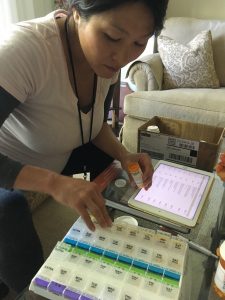
When she is satisfied that Alan has no more questions, Naoko prepares Rita’s medications for the week. Dr. Boblett has already coordinated with the specialist Rita saw yesterday, and Naoko can see the updated medications list on her iPad. She fills Rita’s weekly pillbox, and reminds Alan to make sure Rita takes her medications so she can stay ahead of the pain.
Rita’s eyes are closed, and Naoko whispers her goodbyes. Back in the Mission Hospice office, she will finish her charting for these patients, check in with her colleagues, and finalize details for tomorrow’s visits.
Naoko loves that she can spend the day caring for others (even while seven months pregnant), and considers the time she spends with patients in their home a gift.
“Hospice nursing can be sad – but if I can reduce someone’s pain and help provide a good death, that is the most beautiful thing I can do.”
It was a beautiful day.
Kathryn Breaux
February 2016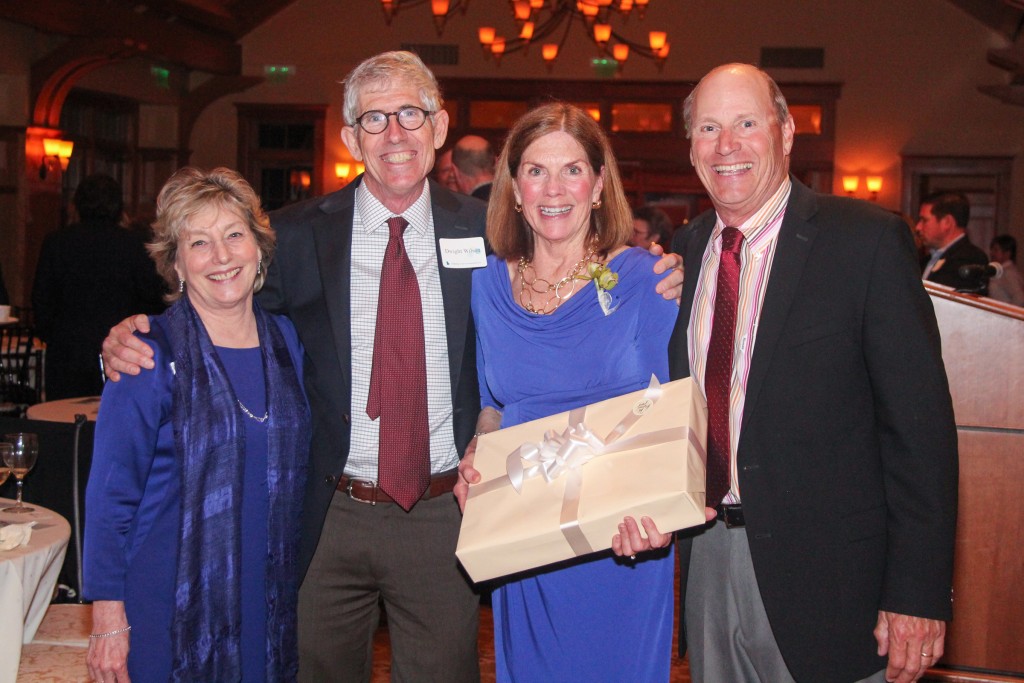
With her brilliant smile and unassuming nature, Kathryn (Kate) Breaux has been a part of Mission Hospice since our very beginnings in 1979. Good friends with our co-founder Mac Nash, Kate was an early supporter of the organization – and along with her husband Dick, she is to this day one of our most generous, dedicated donors.
Kate’s commitment to our work earned her the 2016 Lotus Award, presented at our Anniversary Celebration in January. The Mission Hospice Lotus Award was created in 2005 to recognize individuals who have shown outstanding support of the organization.
Over the years, Kate has found so many ways to support the work of Mission Hospice. She served two long stints on our Board of Directors, including a term as Board Chair in 2005.
“Kate is just a special, delightful person,” says Board Chair Judy DiPaolo. “She does things in a very quiet and understated way, and she is very committed. Kate has recruited a number of great board members, and she and Dick have been exceptionally giving of both their time and their resources.” For many years, Kate served as the chair of the Lotus Award committee, and she was surprised and flattered to be on the other side of the table. Lotus Award committee chair Mary Chigos called Kate “an obvious candidate for the award.”
“Kate has helped lead Mission Hospice through years of growth and change,” says Mary, “and she was among the first supporters of our hospice house c
ampaign.”
Having spent much of her life focusing on young people, as a teacher and a mother, Kate was initially hesitant to get involved in Mission Hospice. When she was asked to join the board, Kate says, “I thought, well – life is my life – not death. But then I realized that death is as much of a part of life as birth is. We’re ushering people in and out of the world – and this work is as necessary as helping parents and children grow.”
Kate says that all of her work with Mission Hospice has been immensely rewarding. “The people I have met at Mission Hospice have so enriched my life,” she says. She particularly enjoyed working with our Director of Spiritual Care, Rev. Linda Siddall, to reach out to faith-based groups, a project that led her to a role on the board of St. James Community Foundation, which supports underserved middle school students in San Mateo.
“Hospice has really helped me with my outlook on life,” Kate says. “It sounds clichéd, but I feel that I’ve taken away much more than I’ve given. Isn’t that always the way,” she continues. “You get involved in something to help others, and the good comes back to you.”
June Field & Alice Flynn
February 2014
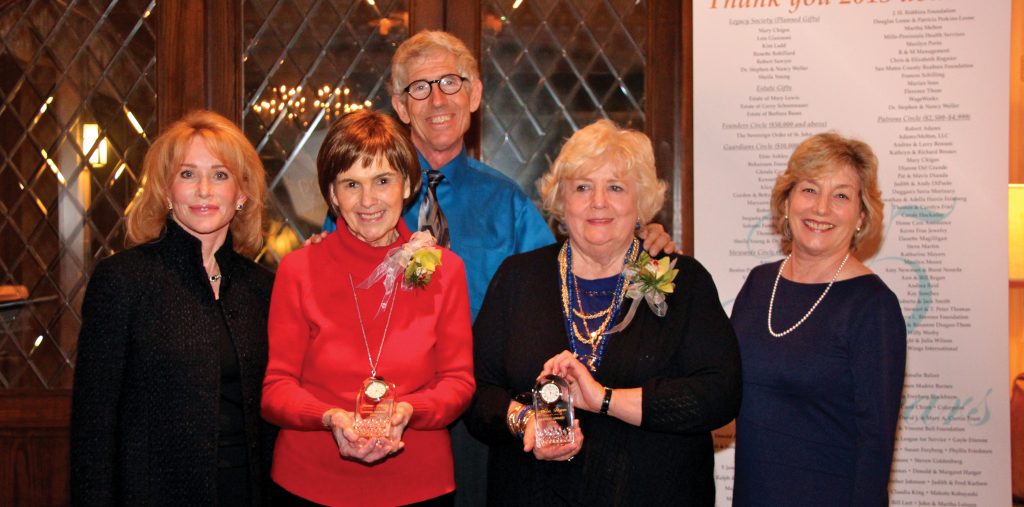
At Mission Hospice, patient care takes a village – those involved in direct care, as well as those dedicated to behind-the-scenes support and fundraising. Two very special members of that village – both a part of the Mission Hospice Auxiliary – were honored in January with the Lotus Award.
At last month’s 35th anniversary celebration, the award was presented to not one but two individuals whose volunteer fundraising service on the Mission Hospice Auxiliary over the years has been exemplary: June Field and Alice Flynn.
Lotus Award committee chair Kate Breaux said that these two women, both of whom have been leaders in the Auxiliary for many years, are representative of a fabulous group of volunteers who have worked hard to support the work of Mission Hospice. “It’s really hard to think of the Auxiliary without June and Alice – they are both so supportive and so dedicated.”
June Field joined the Auxiliary in 1994 when she retired after many years of teaching kindergarten. “I didn’t even know what hospice was when I joined – but my friend Flo [Tyler] asked me to join her in this fabulous group,” says June. “It’s such a nice group of people – we really have fun together.”
“From the inception, June was involved in all aspects of the Auxiliary,” said Kate. “Her positive spirit and attitude make everything seem possible.”
Over the past 19 years, June has done everything from ordering supplies, handwriting bereavement letters, and helping organize the Auxiliary’s annual fundraising gala. She served as the Auxiliary President three times.
As one of the longest-serving members of the Auxiliary, June has become a mentor to newer volunteers, helping them understand the history of the organization’s success over the years.
Another long-serving Auxiliary volunteer, Alice Flynn joined the group in 1999 along with her sister Margaret. Like June, she was recruited to the Auxiliary by a friend. As a Pan Am alumna, Alice has been instrumental in gaining the charitable support of World Wings International, an organization of former Pan Am employees.
In addition to serving as president from 2002-2004, Alice has devoted herself to recruiting sponsors for the annual fall gala. “Alice constantly comes up with creative, successful events to raise money to support our work,” said Kate. “She really puts herself out there and – like June –has been integral to the success of the Auxiliary.”
As it happens, June and Alice are also good friends – something that’s common among these hard-working Auxiliary members. “There are so many wonderful women who make the Auxiliary successful,” said Kate, and it’s really satisfying to be able to honor two special members of this group that works so hard to support the work of Mission Hospice.”
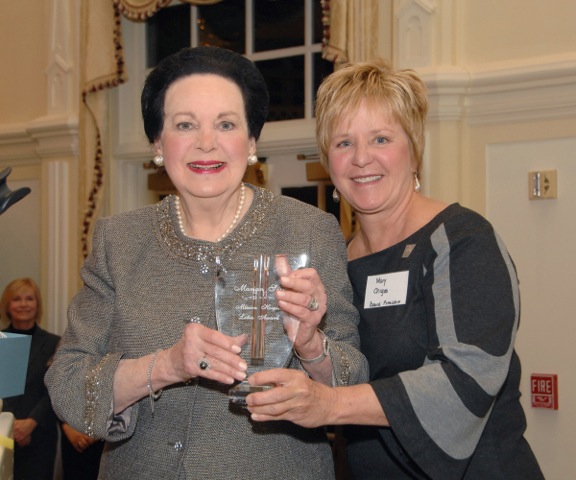
Marian Soss
January 2009
Marian Soss, this year’s recipient of the Lotus Award for outstanding support of Mission Hospice, graciously combines a personal passion with her longtime support of Mission Hospice’s work in San Mateo County.
Most recently, she dedicated the profits from a new book, Let Love Abide, The Marian Soss Sampler Collection (available at www.inthecompanyoffriends.com) to Mission Hospice. The book, published last fall, is a testament to Marian’s love of needlework samplers. It’s also a memorial to her her mother-in-law, Rose Soss, who gave her first sampler as an engagement gift, and to her late husband, Dr. Thomas Soss, who joined Marian both in collecting samplers and in supporting Mission Hospice. The collection includes many rare and beautiful pieces, including one sampler that dates to 1734. For Marian, the visual beauty and artistry of the samplers, mostly created by children, is only a part of their charm.
“I usually picture these little girls sewing the samplers,” said Marian, who has two daughters, a son and three grandchildren. “Were they sad little girls? Did they have a sense of humor?”
Over the years, Marian has given hundreds of talks and presentations on her collection, and has donated the honoraria to Mission Hospice. She still averages about one event per month.
An early member of the Mission Hospice board of directors, Marian also was a charter member of the Auxiliary. Marian said she receives her greatest pleasure when she meets people who used and benefited from Mission Hospice services. These meetings have occurred at charity events, other meetings and even chance encounters on the street.
“They always say something similar; ‘Mrs. Soss, I know about your connection to Mission Hospice. May I tell you about the wonderful caregiver who helped me through a most difficult time,’ or ‘I couldn’t have survived mentally or physically when my spouse was dying ifhospice hadn’t been there for me.’”
“I feel this is the finest tribute to Mission Hospice and I feel privileged to be a part of it.”
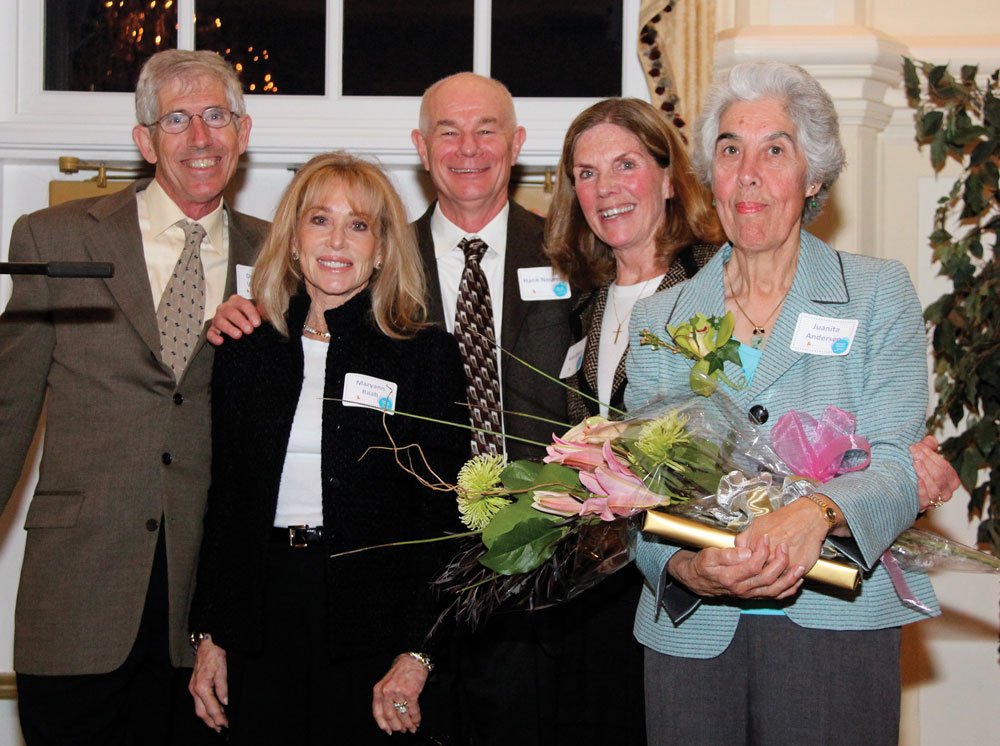
Juanita Andersen
February 2013
Direct Care volunteer Juanita Andersen is the epitome of positive thinking. Upbeat and funny, she is quick to smile and joke. But she becomes serious when she discusses her work with Mission Hospice & Home Care. Her commitment to serving patients spans 29 years, longer than any other volunteer.
Her service and dedication to patient care earned her the Lotus Award at January’s 34th anniversary celebration. The award was created in 2005 to recognize individuals who have shown outstanding support of Mission Hospice. Past recipients include Adella Harris (2005), John Nash (2006), Rev. Stuart Coxhead (2007), Marian Soss (2009), Robert Sawyer (2010), Karen Leonardini (2011) and Dr. Stephen Weller (2012).
Lotus Award committee chair Kate Breaux said the decision was especially gratifying this year. “We have incredible service from everyone on our staff, from the doctors though the social workers and chaplains, but it’s volunteers like Juanita who set Mission Hospice apart. They are the ones who make such special connections with our patients and their families,” Kate explained. “Juanita is the most modest, unassuming person I’ve met, and it’s really special to recognize a person who’s given so much and yet is so humble.”
Juanita starts with an initial meeting with the patient’s family to find out what they need. Often her time is spent simply being present with a patient – visiting, propping up their pillows, reading to them, or listening to music – and allowing the family members to have a break. She emphasizes that her job is really to honor the patient’s wishes. “Their life is changing. If you can offer them choices, it gives them some power.”
Juanita also enjoys sharing what she’s learned with other volunteers. “It feels good to pass along some of your knowledge to someone,” she says, lighting up as she recounts some funny experiences she’s shared with other volunteers. “It’s really amazing what our volunteers will do for our patients.” Juanita knows. She’s helped well over a hundred patients and families over the years.
Juanita’s generosity spreads far beyond Mission Hospice. In addition to her time with patients, she currently teaches PE at a retirement home and established a program in adult education. Over the years, she’s served on the PTA, led Brownies and coached her children’s sports teams.
“There’s an inner satisfaction that you get from helping others. It’s a way of paying back your community,” Juanita explained. “Even though there’s no monetary value to this work, there’s a spiritual value to it.”
Karen Leonardini
 February 2011
When Karen Leonardini learned she was the 2011 Lotus Award recipient for outstanding support of Mission Hospice & Home Care, she was mystified, recalled nominating committee chair Kate Breaux. “But I don’t think it’s a surprise to anyone else,” said Breaux. “Karen has been with Mission Hospice & Home Care in so many different capacities – initially as a volunteer nurse, as a board member and as board chair during a very challenging time – and she’s continued to support us.”
Leonardini received the award during the 32nd anniversary celebration on Jan. 30 at the Peninsula Golf and Country Club. Borel Private Bank also was recognized for its ongoing support.
A graduate of the University of San Francisco, Leonardini had been a nurse for 15 years when she first read about Mission Hospice. “At that time, you died in the hospital and caring for those individuals used to break my heart,” she said. “They were in a foreign place and visitors were restricted. On the other hand, my grandfather died at home and it was peaceful.”
Leonardini started volunteering at Mission Hospice in the mid-1980s when her youngest child – she and husband Tom have five children and 10 grandchildren – started school. “I loved the people I worked with and I loved the people I cared for,” she said. “It was such a different time. I remember one patient, a young divorced woman whose 14-year-old daughter was taking care of her. The mother would lie on the couch and the daughter would leave her food and medicine and water while she went to school. This child was alone, caring for her dying mother.”
She recalled that Dr. Pierre Salmon, Mission Hospice’s first medical director, thought the organization was filling a temporary need. “He felt that eventually, the medical profession would take over hospice care,” she said. “The reason Mission Hospice & Home Care has survived is that it has changed with the times. It has stayed a private hospice but with new programs.”
Over the years, Leonardini’s role also changed. She gave up bedside work in 2000 and became a public speaker and board member, serving as chair in 2001.
“I guess I’m still a spokesperson in an informal way,” she said. “Death is as dramatic a time of your life as birth. You may notice that a lot of hospice nurses were in obstetrics or were midwives before. That’s because birth and death are related. It can be very frightening, but it also can be very calm. With hospice, we can help facilitate dying in peacefulness and comfort.”